One of the most important things to understand before sending cryptocurrency is whether your chosen coin and blockchain network are supported by the platforms you are using.
Many failed transactions occur simply because users send the correct cryptocurrency through the wrong blockchain network or send an unsupported coin altogether. Understanding the difference between coins and networks can help you avoid costly mistakes and ensure your transactions are processed successfully
What Is a Cryptocurrency Coin?
A cryptocurrency coin is a digital asset that operates on a blockchain and is used to store or transfer value. Examples include Bitcoin (BTC), Ethereum (ETH), BNB, Tron (TRX), Solana (SOL), and many others.
Some digital assets have their own independent blockchain, while others are tokens built on existing blockchain networks.
Knowing which cryptocurrency you are sending is the first step toward completing a successful transaction.
What Is a Blockchain Network?
A blockchain network is the infrastructure that processes and records cryptocurrency transactions.
Popular blockchain networks include:
- Bitcoin Network
- Ethereum (ERC-20)
- BNB Smart Chain (BEP-20)
- Tron (TRC-20)
- Solana
Each network has its own transaction speed, fees, wallet addresses, and technical requirements. They also have different infrastructure, security mechanisms, and operational costs.
Maintaining and securing these decentralized networks requires computational resources and continuous participation from miners or validators, which is one of the reasons transaction or gas fees exist.
Why Supported Coins and Networks Matter
Before sending cryptocurrency, it is essential to confirm that both the coin and the blockchain network are supported by the sending and receiving platforms.
For example, sending USDT through the wrong network may result in loss of funds if either the sending or receiving platform does not support that network.
Always verify both the cryptocurrency and the network before confirming any transaction.
Why the Same Cryptocurrency Can Exist on Multiple Networks
Some cryptocurrencies, particularly stablecoins like USDT and USDC, are available on multiple blockchain networks.
For example, USDT can be issued on:
- Ethereum (ERC-20)
- Tron (TRC-20)
- BNB Smart Chain (BEP-20)
- Other supported blockchain networks
Although the cryptocurrency is still USDT, each version operates on a different blockchain and requires the correct network to complete the transaction successfully.
How to Avoid Sending Crypto to the Wrong Network
To reduce the risk of errors:
- Confirm that the cryptocurrency is supported.
- Verify that the selected blockchain network matches the receiving address.
- Double-check the wallet address before sending.
- Read the instructions provided by the sending and receiving platforms before confirming your transaction.
Taking a few extra moments to verify these details can help prevent avoidable issues and potential loss of funds.
Conclusion
Choosing the correct cryptocurrency is only part of a successful transaction. Selecting the correct blockchain network is equally important.
By understanding supported coins and networks, users can avoid common mistakes, and enjoy a safer cryptocurrency experience.
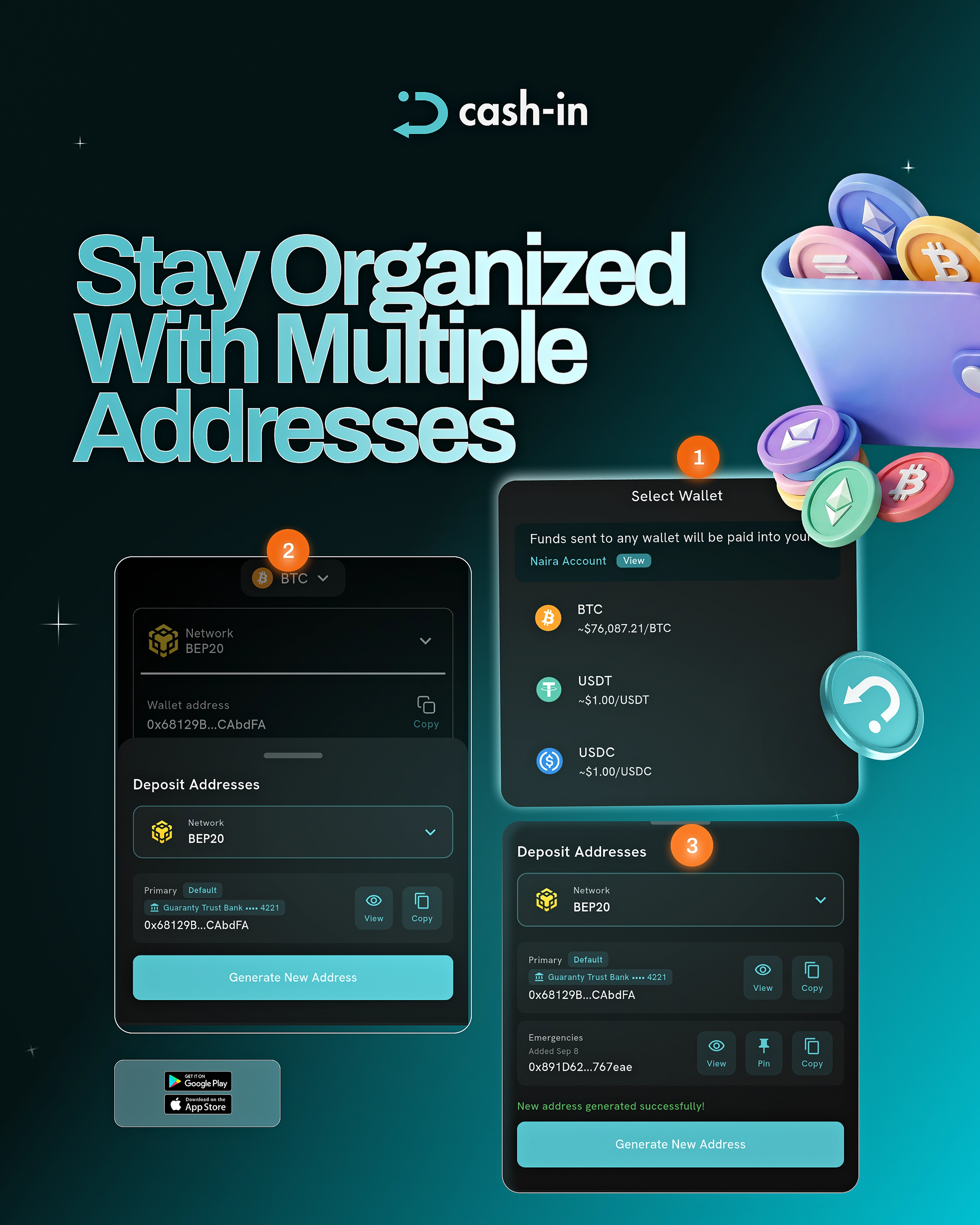
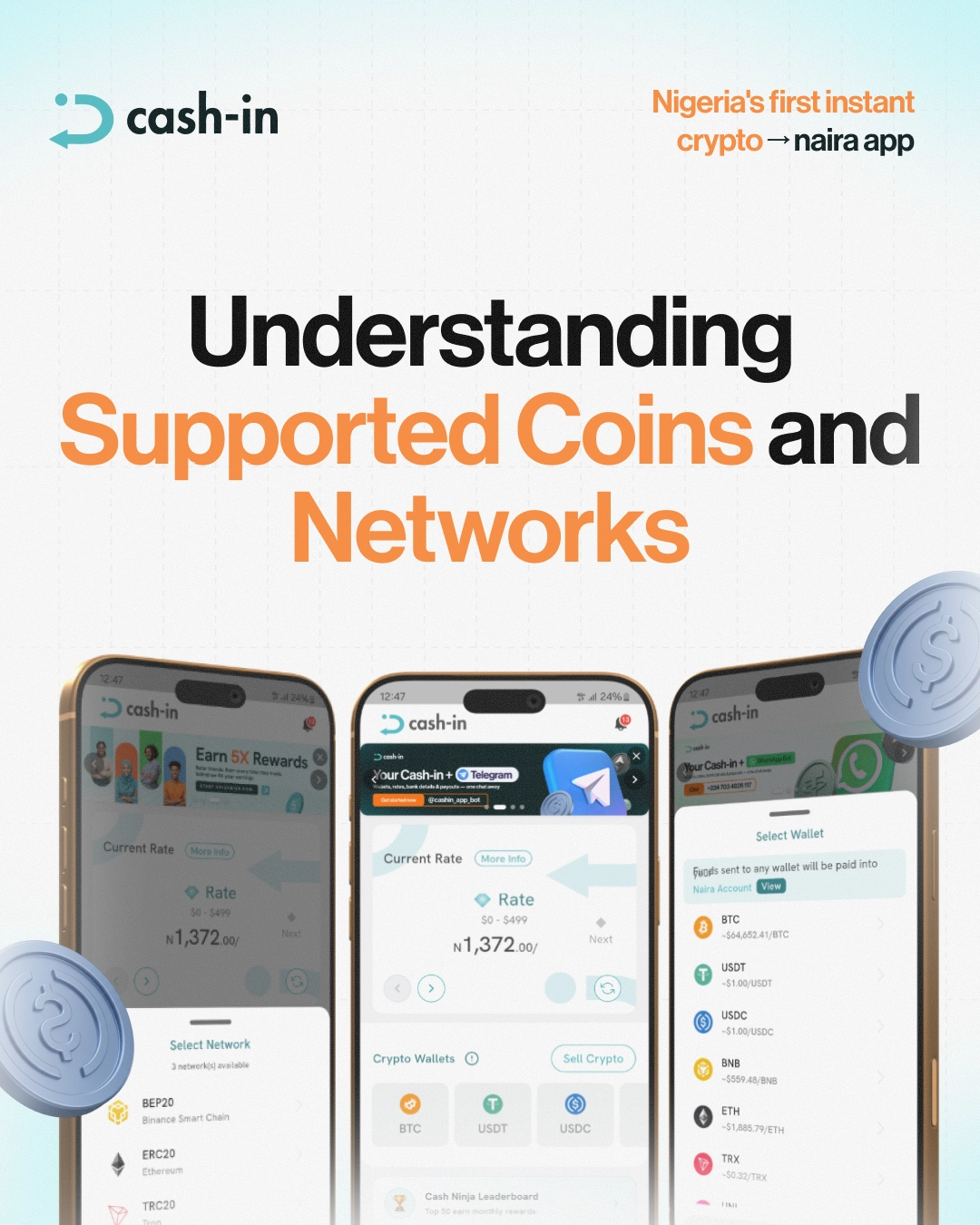
The Cash-in App interface makes it easy to verify the currently supported cryptocurrencies and blockchain networks before sending cryptocurrency.
Although blockchain networks may charge transaction fees, Cash-in does not charge any service fees for crypto to Naira exchanges.
Always ensure that both the cryptocurrency and the selected blockchain network are supported by the sending and receiving platforms before sending funds.
Taking this simple precaution can help ensure your transaction reaches its intended destination successfully.