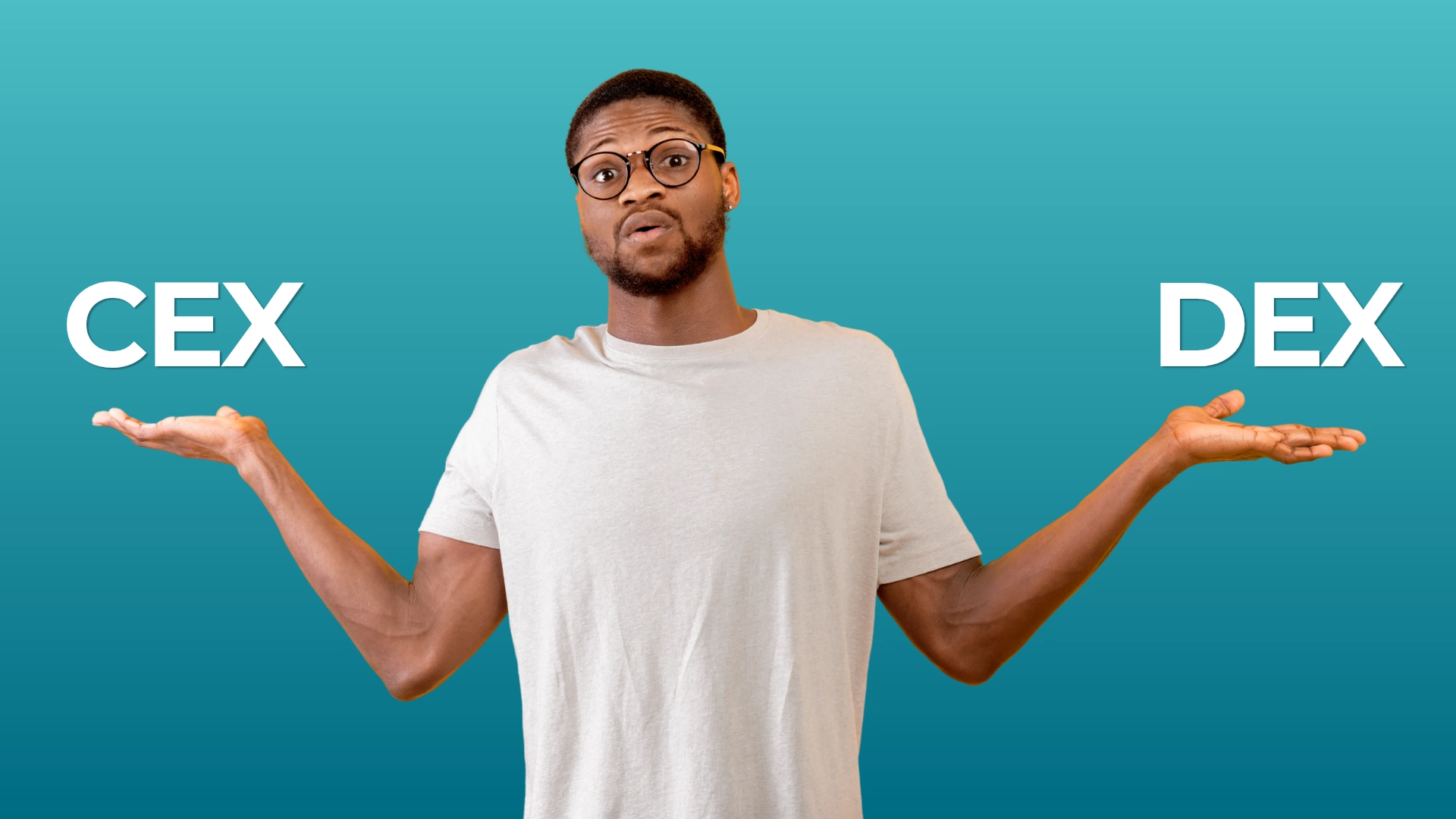
When interacting with digital assets, one of the most important decisions users face is where and how to store them. A crypto exchange is a platform where users can trade digital assets, while also sometimes storing them depending on the type of service. The two most common options are Centralized Exchanges (CEX) and Decentralized Wallets (DEX). Each represents a different approach to custody, security, and control.
Rather than focusing on which is “better,” it is more useful to understand how they work, what they are designed for, and where each fits within the broader ecosystem.
Understanding CEX (Centralized Exchanges)
A Centralized Exchange is a platform operated by a company or centralized entity that facilitates the trading and storage of digital assets. In this model, the platform holds custody of user funds and manages transactions internally.
Examples: Binance, OKX, Bybit, MEXC, Bitget, etc.
Key Characteristics
- Custodial system (the platform controls private keys)
- Account-based access (login credentials instead of seed phrases)
- Integrated services such as trading, staking, and conversions
Strengths
- Simple onboarding and user-friendly interfaces
- Fast transactions within the platform
- Customer support and recovery options
- Suitable for active trading and frequent transactions
Limitations
- Users do not directly control private keys
- Funds depend on the platform’s security and stability
- Access may be restricted due to policies or operational issues
Understanding DEX (Decentralized Wallets / Self-Custody)
A Decentralized Wallet allows users to directly control their digital assets through private keys or seed phrases. There is no intermediary holding funds on behalf of the user.
Examples: MetaMask, Trust Wallet, Rabby Wallet, Phantom Wallet, etc.
Key Characteristics
- Non-custodial system (user controls private keys)
- Direct interaction with blockchain networks
- No central authority managing access
Strengths
- Full ownership and control of assets
- Independence from third-party platforms
- Direct access to decentralized applications (Web3 ecosystem)
Limitations
- Full responsibility for security lies with the user
- Loss of seed phrase means permanent loss of access
- Limited customer support, with no ability to recover lost seed phrases or restore access to self-custodied assets
Key Difference
- CEX: A platform holds your assets on your behalf
- DEX Wallet: You hold and control your assets directly
This custody model is the main distinction between both systems.
Security Perspective
- In CEX systems, security depends on the exchange’s infrastructure, internal controls, and operational reliability.
- In DEX wallets, security depends entirely on how well users protect their private keys and recovery phrases.
Both approaches involve risk, but the type of risk differs.
How Users Commonly Approach It
Many users combine both options depending on their needs:
- CEX for convenience, trading, and quick access
- DEX wallets for self-custody and on-chain interactions
This allows flexibility within different use cases.
Final Perspective
CEX and DEX are not competing endpoints but different tools within the digital asset ecosystem. One emphasizes convenience and structure, while the other emphasizes control and independence.
The choice ultimately depends on how a user balances simplicity, responsibility, and control in managing their assets.